
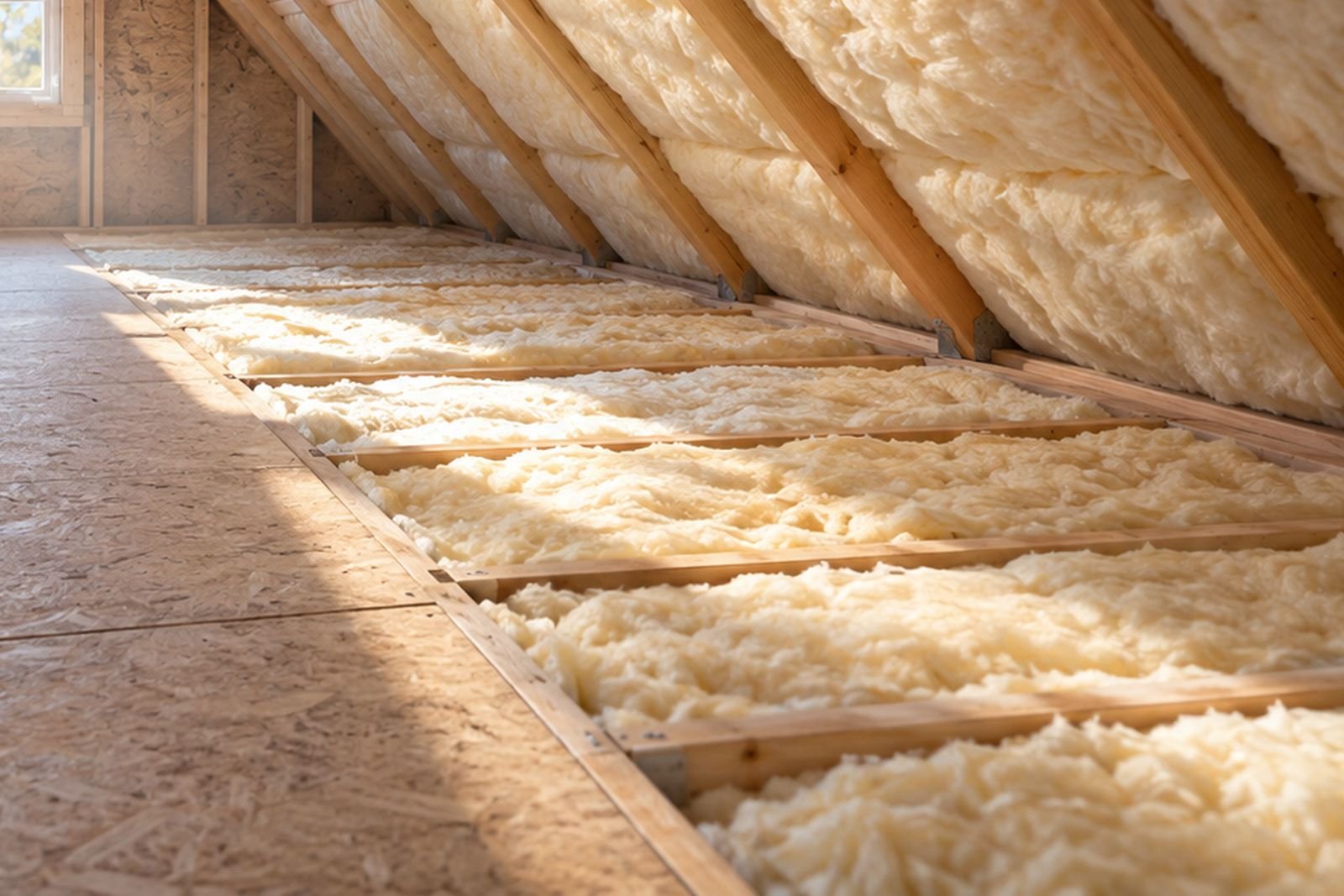
A large share of a home’s heat can escape through an uninsulated or poorly insulated roof. Loft insulation is one of the simplest, most cost-effective improvements you can make, but only if it is the right depth and installed properly.
How much loft insulation do you need?
For most homes, current guidance recommends around 270mm of mineral wool loft insulation. Many older homes have far less, often 100mm or under, laid decades ago and compressed over time.
Signs you need a top-up
- You can see the tops of the ceiling joists, so the insulation is thinner than the joists.
- The insulation looks flattened, patchy, damp or dirty.
- Upstairs rooms feel cold or the house loses heat quickly.
- Your EPC recommends loft insulation improvements.
- Insulation has been disturbed by previous work or stored items.
Why ventilation matters
Insulating a loft makes the roof space colder, which can increase the risk of condensation if moist air can’t escape. Good installation keeps ventilation paths at the eaves clear and considers how moisture moves through the building. That’s why every installation we complete pays careful attention to ventilation and moisture control.
Can you still store things in the loft?
Yes, but boarding directly on top of insulation compresses it and reduces its effectiveness. Raised loft boarding creates a storage platform above the insulation, so you keep both the storage space and the thermal performance.
What about old or damaged insulation?
If existing insulation is damp, contaminated or badly compressed, topping it up isn’t always the best option. In those cases we remove the old material, dispose of it responsibly as a SEPA-registered waste carrier and install new insulation in its place.
Get your loft insulation checked
Whether you need a new installation, a top-up or a full renewal, ICA Insulation’s insulation services are designed to improve comfort, efficiency and EPC performance. Ask for a free quote.